
Non-Opioid Pain Therapy Discovered at Stony Brook Advances with $11 Million Private Investment
A novel, non-opioid pain drug candidate originating from research at the State University of New York at Stony Brook has reached a significant milestone, as Artelo Biosciences announced on March 27 that it has secured $11 million in private investment to advance product development and accelerate this innovative treatment approach toward FDA approval.
The funding marks a critical step in translating years of Stony Brook-based research and collaboration with Artelo Biosciences into a potential new treatment for neuropathic pain, particularly chemotherapy-induced peripheral neuropathy (CIPN), a debilitating condition that affects about 40 percent of people being treated for cancer.
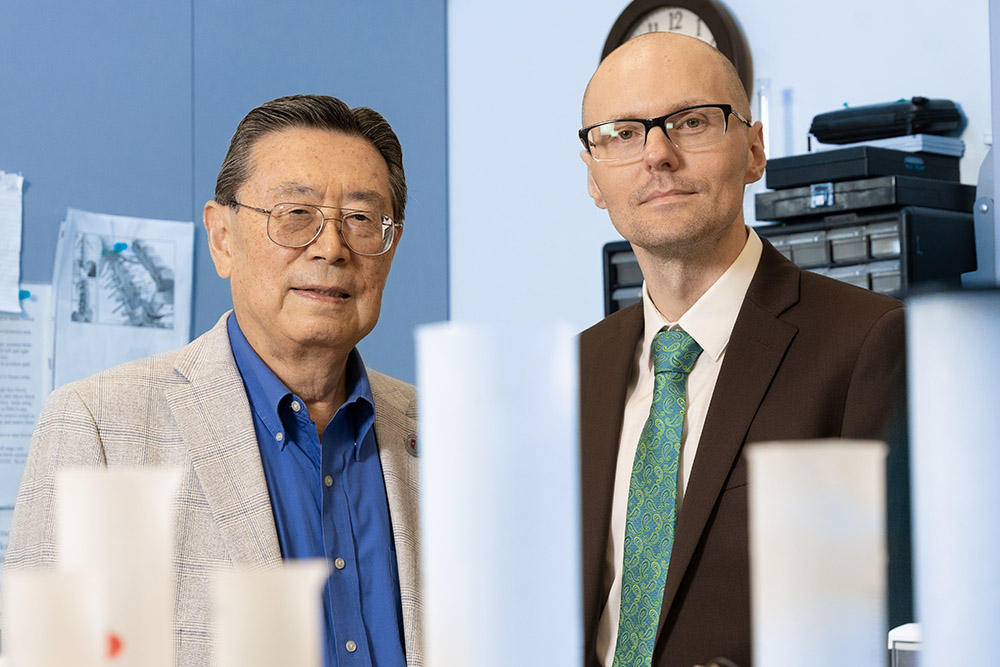
The drug candidate, ART26.12, is being developed by Artelo Biosciences, based in Solana Beach, California. The compound was discovered and initially developed by Iwao Ojima, SUNY distinguished professor and director of the Institute of Chemical Biology and Drug Discovery (ICB&DD), and Martin Kaczocha, professor in the Department of Anesthesiology at the Renaissance School of Medicine at Stony Brook University.
The technology is based on a class of fatty acid binding protein (FABP) inhibitors, including what is now ART26.12, and was licensed to Artelo by Stony Brook’s Intellectual Property Partners (IPP) in 2018 on behalf of the Research Foundation for the State University of New York.
“The development of these novel FABP5 inhibitors has been an innovation that IPP has been excited about from its earliest days of development, and a great example of pairing Stony Brook’s talented researchers to build a partner-ready technology consisting of both a novel therapeutic target and new molecule,” said Adam DeRosa, assistant vice president of IP and commercial partnerships. “It is very rewarding to see the continued support that Artelo puts behind the commercialization of ART26.12 as we get closer to bringing this first-in-class therapeutic to market.”
ART26.12 is a first-in-class small molecule therapy that targets fatty acid binding protein 5 (FABP5), representing a fundamentally different approach to pain management. Unlike opioids or steroids, the therapy is designed to modulate the body’s lipid-signaling pathways without the risks of addiction or severe side effects that often accompany existing treatments.
The newly announced $11 million investment will support continued clinical advancement, including the next phase of safety and efficacy studies. These next steps are essential to determining the therapy’s effectiveness in addressing neuropathic pain in clinical settings.
 Gregory D. Gorgas, president and
chief executive officer of Artelo Biosciences.
|
Gregory D. Gorgas, president and chief executive officer of Artelo Biosciences, emphasized that leveraging known and underutilized lipid-signaling pathways is a potential game changer that could revolutionize the way pain is treated for many generations.
Artelo Biosciences is the first and only company to bring a selective FABP5 inhibitor into human clinical testing, marking an important step forward in developing a novel, non-opioid and non-scheduled approach to pain management, according to Gorgas.
“This is not just another non-opioid therapy; it is a completely new strategy using functional lipidomics to improve pain management, now in human clinical testing for the first time,” said Gorgas. “We believe this innovation has the potential to significantly impact pain treatments, prevent painful neuropathies and expand options for an approach that may prove to be safer and more effective.”
For Stony Brook, the milestone reflects the strength of its research enterprise, powered by a world-class R&D ecosystem of more than 1,000 research faculty, over 2,000 patents, and a dynamic Research and Development Park, advancing innovation at scale with a clear commitment to delivering societal benefit. The development of ART26.12 aligns closely with the university’s broader emphasis on translational science, industry partnerships and innovation that delivers tangible public benefit.
Neuropathic pain remains a significant and often under-treated condition. More than 20 percent of Americans experience chronic pain annually, and neuropathy is among the most difficult forms to manage. In cancer care specifically, CIPN can be severe enough to force patients to reduce or discontinue life-saving treatments. Currently, there are no FDA-approved therapies indicated for CIPN.
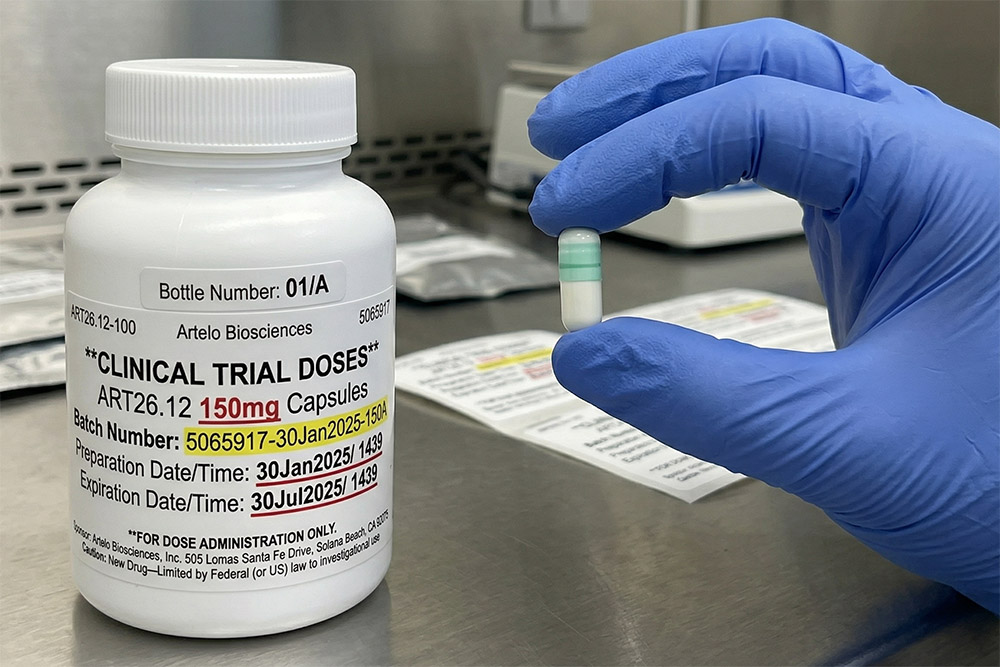
ART26.12 aims to address that gap. In multiple pain models, preclinical research demonstrated profound pain reduction and additional potential benefits, including improved tolerance to chemotherapy. Importantly, ART26.12 has shown indications of broader therapeutic applications in conditions such as diabetic neuropathy, nerve injury and osteoarthritis. Early clinical data have also shown a favorable safety profile, with no adverse effects due to ART26.12 observed in the initial human studies.
“This approach stands out for its novelty,” said Kaczocha. “While many non-opioid therapies are in development, this is the first inhibitor of its kind targeting FABP5 to enter clinical testing, representing a truly distinct mechanism for addressing pain.”
“The therapy’s underlying strategy is considered particularly promising,” said Ojima. “Because it wisely leverages the functions of endogenous substances in the human body, ‘endocannabinoids,’ to control pain, a strategy that would maximally mitigate undesirable side effects while exerting efficacy.”
The March 27 financing announcement also underscores growing external confidence in both the science and its commercial potential. Investment at this stage signals that ART26.12 is moving beyond proof of concept toward a more defined clinical and regulatory pathway.
“For Stony Brook, this milestone shows how the discovery of a new non opioid approach to pain in our laboratories can move toward becoming a real therapy for patients,” said Mónica Bugallo, interim vice president for research and innovation at Stony Brook. “It is a clear example of how university research, combined with strong partnerships and investment, can translate into new solutions that address major health challenges and improve people’s lives.”